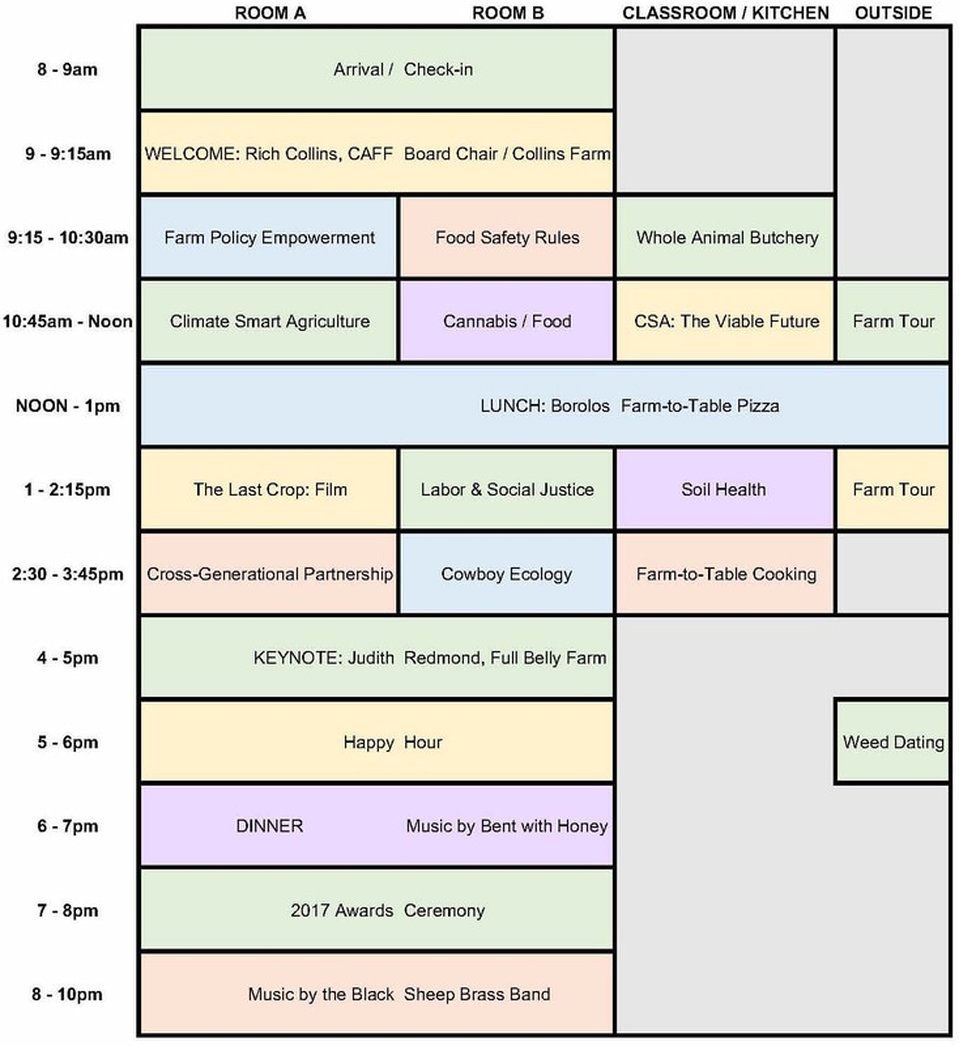
2017 FARMERS GUILD-RAISING SCHEDULE: FEBRUARY 18
(workshop times are subject to change)
2017 WORKSHOP DETAILS:POLICY EMPOWERMENT FOR FAMILY FARMS & FOOD ADVOCATESThe success of your farm and of sustinable food and farming systems depends not only on the boot-strapping perseverance of lone agrarians, but also on the context in which we farm. Regulations, subsidies, trade laws and other policies can either make or break family farms like ours. But can the voice of small-scale agrarians and local food communities be heard over the din of high-paid lobbyists and politicians far removed from the field? In this interactive workshop, find out what it takes to be effective in policy reform, getting the attention of policymakers and building strong alliances--no matter who you are or how much time or money you have to give. Your input here will also help us shape CAFF's policy platform in the year ahead.
Dave Runsten, CAFF Policy Director; Michael Dimock, Roots of Change; Lynda Hopkins, Sonoma County Supervisor & Co-Owner, Foggy River Farm FOOD SAFETY MODERNIZATION (FSMA): WHAT DO I NEED TO KNOW?
Farms subject to FSMA will need to start complying in January 2018 to new Food Safety Modernization Act rules. Is your farm one of them? In this workshop we'll explore what makes a farm fully exempt from the law, partially exempt, or fully subject. We’ll offer plenty of time for questions and a variety of paper and electronic resources available to attendees. Kali Feiereisel, MPH, CAFF Food Safety Specialist WHOLE BEAST BUTCHERY & COOKERY
Let’s roast a whole pig and demystify the art and science of whole beast butchery and cookery. We will buy a great pig, from a local farmer who regenerates the land with proper animal husbandry and ecological stewardship and, we will break it down, step by step, as a group, discussing the piggy parts and proper culinary techniques as we fabricate roasts, chops, hocks, ribs, etc. We'll discuss how to cook each cut appropriately, but also how to take advantage of every morsel with techniques like rendering the fat, no fuss healthy bone broths, and classic pâtés. We re-skill ourselves in community as we rebuild our local food-shed. At the end of the day, we will feast together in community, with a blessing to the hands and hooves that feed us. Chef Seth Peterson, a local larder; Aaron Gilliam, Sweet Grass Grazing COWBOY ECOLOGY: GRAZING THE WAY TO A BETTER FUTURE
Can you improve productivity and profitability using tools and resources you already have? The California Rancher-to-Rancher project helps set up a small, no-risk learning site trials on ranches for concentrated and rotational livestock grazing. By pairing experienced ecologically-minded ranchers with newer practitioners, this simple process of monitoring soil surface helps to determine optional soil carbon sequestration, healthy pasture and ranch viability. Kent Reeves, wildlife-range ecologist, packer, and cowboy with The Whole Picture Consulting, LLC FARM-TO-TABLE: COOKING TO SUPPORT FAMILY FARMS
Join Merrilee Olson of Preserve Farm Kitchen and other culinary professionals for an interactive workshop on how home chefs and food industry professionals alike can cook, source ingredients, and design menus in ways that empower smaller-scale, local and family farms. From getting creative with seasonal products to preservation techniques, building relationships with local producers to using whole plants and animals, learn how your choices in the kitchen can help sustain your neighborhood farmers and ranchers. Merrilee Olson, Preserve Farm Kitchen CLIMATE SMART FARMING IN A CHANGING CALIFORNIA
With the uncertain impacts of climate change hanging over every farm and ranch in California, find out how CAFF will work with farms, researchers, and other agencies in the years ahead on demonstration projects to test practices that sequester carbon and improve soil health. The results of these projects will help CAFF design programs that reach family farmers and guide our Policy Director as well as our partners at CalCAN to garner state support for climate smart practices. There will be plenty of time for questions and discussion. Sara Tiffany, CAFF Climate Smart Farming Program Specialist COMMUNITY SUPPORTED AGRICULTURE (CSA): THE VIABLE FUTUREJoin your peers to discuss CSA specific challenges, explore solutions, and pinpoint areas of needed support. During this interactive presentation, CAFF will share our experiences with innovative marketing strategies and highlight a few nuggets of data from recent CSA studies that are directing our plans for working with CSA farms in the year ahead. With plenty of time for dialogue, we welcome your insight as we begin integrating our work with existing Farmers Guild efforts across the state.
Elizabeth Kaiser, Singing Frogs Farm; Michelle Wyler, CAFF CSA Network; and more VISUAL SOIL ASSESSMENT: DIY HEALTH MONITORING ON YOUR FARM
Join Dr Joshua Beniston from the Santa Rosa Jr. College’s sustainable agriculture program to learn about Visual Soil Assessment (VSA). VSA is a process for evaluating your soil’s condition and health by using indicators that can be assessed in the field with your hands, eyes, and a shovel. VSA was developed in New Zealand as a protocol for farmers to monitor their soils without laboratory analyses. We will also have time for discussion about soil health and laboratory tests that are useful for farmers. Dr. Joshua Beniston, SRJC, Sustainable Agriculture Dept. THE LAST CROP: FILM SCREENING
The Last Crop tells a personal story of a family caught in the middle of a delicate interplay between urban and agricultural space in California’s Central Valley. The film follows Annie and Jeff Main, owners of a small organic farm as they try to remain viable in a rapidly changing, highly competitive agricultural environment. It’s a story about dreams and passing them on to the next generation. LEARN MORE HERE: www.thelastcropfilm.com CROSS-GENERATIONAL PARTNERSHIPS: REDEFINING FAMILY FARMS
Are the days of traditional family farm succession behind us? Today, many farmers can’t be sure that their children will stick around to inherit the farm. Meanwhile, agriculture is attracting a whole new wave of first-generation recruits equipped with passion and skills, but lacking family land and legacy. Join us for a conversation with farmers forging partnerships with young upstarts outside their own bloodlines to assure their land and life’s work carries over into the next generation, redefining what it means to be a “family” farm. Alan Haight & Antonio Garza, River Hill Farm; Tom Willey, T & D Willey Farms CANNABIS & FOOD: TWO AGRICULTURAL INDUSTRIES, ONE FUTURE
What impact will the newly legalized recreational cannabis industry have on food-based family farms here in California? Join us for a conversation with representatives from both industries as well as those working to shape new regulations to explore this ever-shifting dynamic. By proactively anticipating the growth of this newly emerging industry and meeting concerns head on, we intend to explore creative possibilities that could protect the viability of existing food farmers and even incentivize mutually beneficial collaboration between all farmers to promote the crop diversity needed for a healthy food system and a strong economy. Tawnie Logan, Sonoma County Growers Alliance; Casey O'Neil, Happy Day Farms; Hezekiah Allen, California Growers Association; Andrea Davis-Cetina, Quarter Acre Farm GROWING SUSTAINABLE LABOR & SOCIAL JUSTICE ON FAMILY FARMS
Many farmers and food businesses are working to change the food system to promote empowerment, social justice, and fairness for all who labor from farm to table. Come hear farmer Jim Cochran of Swanton Berry Farm on becoming the first farmer in California to unionize his employees and obtain Food Justice Certification (FJC). Learn about the standards set forth by the Agricultural Justice Project to do for farmworkers what organic certification did for soil health and ecology. Come away with a better understanding of the new California labor laws and how family farmers can be proactive and profitable employers under the new legislation. Jim Cochran, Swanton Berry Farm; Alannah Kull, Agricultural Justice Project; Gervacio Pena, Graton Day Labor Center; Gail Wadsworth, California Institute for Rural Studies FARM TOURS: SHONE FARM
Santa Rosa Junior College’s Agriculture/Natural Resources Department is unique with Shone Farm providing an outdoor educational laboratory for students. This beautiful and bountiful property includes 120 acres of forest, 100 acres of pasture, 70 acres of vineyard, 12 acres for crop production, and 4 acres of olive and apple trees, one of the largest agriculture sites in the California Community Colleges system. In addition, there is open space around the farm’s perimeter that serves as wildlife habitat, as well as the farmstead, which includes various buildings and improvements. 2017 KEYNOTE: JUDITH REDMOND, FULL BELLY FARM
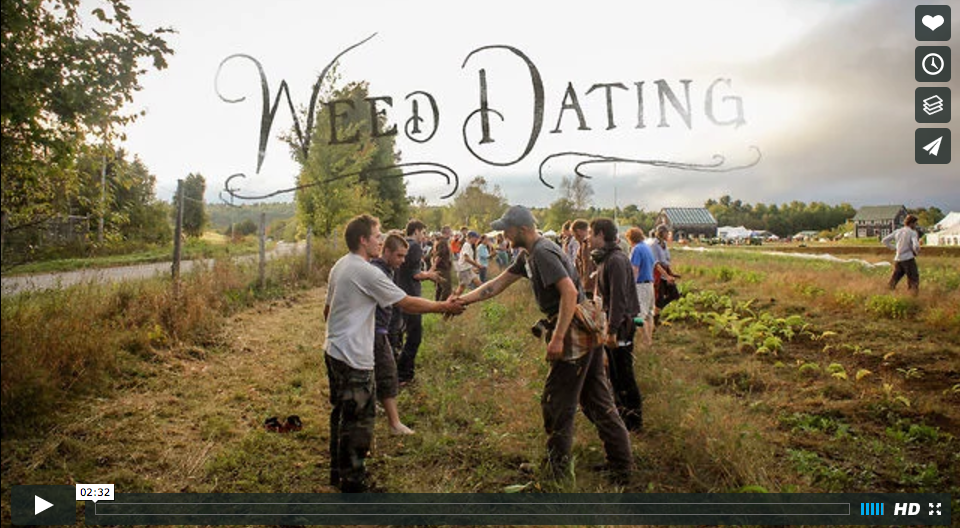
Co-owner of Full Belly Farm, Judith Redmond helps operate this renowned 350-acre, organic farming operation in the Capay Valley, founded in 1985. Her farm now grows and markets over 80 different crops, operates a successful wholesale and retail business, and runs educational and community programs. Judith has been involved with CAFF for nearly 25 years, helping to direct programs and policies that ensure sound land stewardship, a proactive approach to climate change and the viability of family farms for generations to come. WEED DATING: AGRARIAN SINGLES, ROLL UP YOUR SLEEVES & FIND LOVE
AND MUCH, MUCH MORE!
|